Cataract Prevention in the Produce Aisle!


Did you know that regularly enjoying a piece of fruit and a side of vegetables can help prevent vision loss from cataracts? Many Americans don’t eat enough fresh vegetables and fruits. Most of us know that these foods are important for avoiding heart disease, stroke and cancer but don’t associate diet with cataract prevention. Studies from the United States, Japan and Sweden show that a diet rich in foods with substances called antioxidants may reduce your risk of developing cataracts. Antioxidants protect our cells from damage caused by molecules called free radicals. That damage is called oxidation. Free radicals in our bodies may come from:

Oxidation can lead to cataracts by causing changes to fats and proteins in the eye’s lens, making the lens cloudy. Antioxidants help slow down or prevent free radical damage. Antioxidants include vitamins C and E, certain substances in plants called flavonoids, and some minerals like selenium.

While you can take antioxidant supplements in the form of daily pills or capsules, these beneficial vitamins and minerals are best when they come from a healthy diet with plenty of fruits and vegetables.

Loading up in the produce aisle and on your plate with fresh veggies and delicious fruits, knowing you are doing your eyes a favor!

A daily diet rich in fruits and vegetables may help prevent cataract formation. If you or someone you know is experiencing cataract symptoms such as cloudy foggy vision, glare or difficult night driving and would like to learn more about cataract surgery & lens implants please schedule an eye exam at The Eye Clinic of Texas, an affiliate of Houston Eye Associates, at 800-423-3937, visit The Eye Clinic of Texas, or facebook.com/ecot.lasik.

The Eye Clinic of Texas is an affiliate of Houston Eye Associates, the largest ophthalmology clinic in the nation. We are a leading eye care practice serving the greater Houston, Galveston, League City and Texas City with offices at 1100 Gulf Freeway, Suite 114, League City, Texas 77573, 7111 Medical Center Drive, Suite 110, Texas City, Texas 77590 and 2302 Avenue P, Galveston, Texas.

Five Fabulous Foods for Your Eyes


Most people are aware that keeping your heart healthy depends in part on what you eat. Fortunately, the same diet that helps your heart is good for your eyes!

Eating a diet low in fat and rich in fruits, vegetables and whole grains can pay benefits not only to your heart but to your eyes. The isn't surprising as your eyes rely on tiny arteries for oxygen and nutrients, just as the heart relies on much larger arteries. Keeping those arteries healthy will help your eyes.

Some foods stand out as particularly helpful for eye health. Here are five things you should make sure are part of your diet for healthy vision.

  • Leafy green vegetables. Kale and spinach are high in lutein and zeaxanthin, two nutrients found in the healthy eye that may lower your risk for age-related macular degeneration (AMD). Other vegetables with significant amounts of lutein and zeaxanthin include romaine lettuce, collards, turnip greens, broccoli and peas. And while not leafy and green, eggs are also a good source of these nutrients.
  • Citrus fruits. Oranges, tangerines, grapefruit and lemons are high in vitamin C, an antioxidant critical to eye health. Research shows that your eyes need relatively high levels of vitamin C to function properly, and antioxidants can prevent or at least delay cataracts and AMD. Lots of other foods offer vitamin C, including peaches, red peppers, tomatoes and strawberries.
  • Beans. All kinds of beans (legumes), including black-eyed peas, kidney beans and lima beans, contain zinc, an essential trace mineral that is found in high concentration in the eyes. Zinc may help protect your eyes from the damaging effects of light. Did you know that peanuts are a legume too? Other foods high in zinc include oysters, lean red meat, poultry and fortified cereals.
  • Cold-water fish. Research shows that diets rich in omega-3 fatty acid from cold-water fish may help reduce the risk of developing eye disease later in life. These fish include salmon, tuna, sardines and halibut.
  • Orange-colored vegetables and fruits. Carrots are high in beta-carotene, a nutrient that helps with night vision, as are other orange-colored fruits and vegetables like sweet potatoes, apricots and cantaloupe. Making them a part of a colorful diet can help you keep your eyes healthy.

You can help to keep your eyes healthy by eating a “heart healthy” type diet. Learn about how diet can impact eye health and vision when you schedule an eye exam at The Eye Clinic of Texas, an affiliate of Houston Eye Associates, at 800-423-3937, visit The Eye Clinic of Texas, or facebook.com/ecot.lasik.

 The Eye Clinic of Texas is an affiliate of Houston Eye Associates, the largest ophthalmology clinic in the nation. We are a leading eye care practice serving the greater Houston, Galveston, League City and Texas City with offices at 1100 Gulf Freeway, Suite 114, League City, Texas 77573 and 7111 Medical Center Drive, Suite 110, Texas City, Texas 77590.

Nine Signs Children May Need an Eye Exam


Back-to-school shopping lists might include school supplies, new clothes, and even a haircut, but does it include an eye exam? It really should! Comprehensive eye exams can detect a variety of eye conditions that, left untreated in a child, could result in partial or complete loss of vision later in life. Common conditions include astigmatism and nearsightedness. Conditions such as amblyopia can cause serious problems if not addressed early in life. A screening at a pediatrician’s office is a great way to get referred for a vision or eye problem suspected in a child, but even a screening can miss eye problems that would be found during a full dilated eye exam. Here are nine signs children may need an eye exam:

·       Complaining of headaches: When children overly strain their eyes to focus, this causes headaches over extended periods of time

·       Becoming fatigued after reading: Eye fatigue is when eyes are burning, itching, or tired. It might be difficult to notice these symptoms in a child, but if a child is falling behind in reading comprehension or shies away from reading activities, this might be the culprit

·       Poor sports performance: If a child’s visual processing seems slower than it should, this might be a sign there is a vision issue at play. A child with an untreated vision problem might perform poorly in sports due to clumsiness, poor hand-eye coordination, inability to focus or skewed depth perception

·       Squinting or closing one eye: Squinting does not damage eyes, but it might be a sign that a child needs glasses. By squinting, a child is subconsciously attempting to make the pupil smaller, therefore letting in less light. This technique enhances a child’s focus that might be potentially blurry

·       Blinking or rubbing eyes: If a child rubs his/her eyes while trying to concentrate on an activity, particularly reading, or while being active, it could mean the child has a vision problem

·       Poor reading ability and comprehension: Good vision is essential for students of all ages to reach their full academic potential. If a child seems disinterested in reading, is sidetracked easily, does not understand material read, or reads the same sentence multiple times, it might be time to schedule an eye exam

·       Poor school performance: It is important for parents to remember that children do not have a concept of poor vision, so they might not always tell you when they cannot read something their teacher writes on the blackboard. As a result, his/her grades can suffer

·       Holding electronic devices or books too close to eyes: It is a myth that sitting too close to electronic devices can hurt your eyes, but if a child is sitting too close to the TV or holding a book too close to his/her face, it might be a sign of a vision problem. Leaning closely in to read text or see images on the television might often mean a child is living with nearsightedness

·       Loss of place while reading: Using a finger to track the words can be typical behavior for a child who is learning to read, but pay attention to this behavior. He or she should eventually be able to focus on the words without losing place

If you or someone you know has a child with eye health or vision problems and who needs an eye exam, please be sure to schedule an eye exam at The Eye Clinic of Texas, an affiliate of Houston Eye Associates, at 800-423-3937, visit The Eye Clinic of Texas, or facebook.com/ecot.lasik.

The Eye Clinic of Texas is an affiliate of Houston Eye Associates, the largest ophthalmology clinic in the nation. We are a leading eye care practice serving the greater Houston, Galveston, League City and Texas City with offices at 1100 Gulf Freeway, Suite 114, League City, Texas 77573, 7111 Medical Center Drive, Suite 110, Texas City, Texas 77590 and 2302 Avenue P, Galveston, Texas.

SMILE Has Made Me Smile!


“Ever since having the SMILE procedure I have been able to do everything better. I can go hiking and taken in all the beauty unfiltered.  Having no restrictions has been a game changer.  I no longer worry about losing contacts when playing in the pool with the kids.”-Stephanie R.

If you or some you know is tired of the hassle of glasses or contact lenses for seeing at distance and would like to find out if LASIK or SMILE might be a good vision correction option, please call The Eye Clinic of Texas, an affiliate of Houston Eye Associates, at 800-423-3937, visit The Eye Clinic of Texas, or facebook.com/ecot.lasik.

The Eye Clinic of Texas is an affiliate of Houston Eye Associates, the largest ophthalmology clinic in the nation. We are a leading eye care practice serving the greater Houston, Galveston, League City and Texas City with offices at 1100 Gulf Freeway, Suite 114, League City, Texas 77573, 7111 Medical Center Drive, Suite 110, Texas City, Texas 77590 and 2302 Avenue P, Galveston, Texas.

Fireworks Eye Injuries


The most recent Consumer Product Safety Commission report found that 14% of fireworks injuries were eye injuries. In the most severe cases, fireworks can rupture the globe of the eye, cause chemical and thermal burns, corneal abrasions and retinal detachment -all of which can cause permanent eye damage and vision loss. Children and young adults are frequent victims. Children age 15 and under accounted for 36% of the total injuries, according to the commission's report. And half of the injuries requiring an emergency room visit were to people age 20 or younger. Even sparklers can be dangerous, as they burn at more than 2,000 degrees Fahrenheit. Sparklers were responsible for 1,200 of the injuries in the latest report, and a sparkler mishap caused one of the fireworks deaths reported in 2017. The people injured by fireworks aren't necessarily handling the explosives themselves. In fact, 65% of people injured by fireworks were bystanders, according to another study. The statistics don't lie. Children and people not handling fireworks themselves are in as much danger as the people actually lighting fireworks.

Please leave preparing fireworks displays to professionals in order to decrease your risk of fireworks eye injuries. If you or someone you know does experience a fireworks eye injury call us immediately or go directly to the emergency room and have them call us for consultation.

Ultraviolet (UV) Eye Safety Tips


Getting the right amount of UV light is important. Too much UV light exposure raises the risks of eye diseases, including cataract, growths on the eye, and cancer. Strong exposure to snow reflection can also quickly cause painful damage called snow blindness and direct exposure to the sun can cause “solar retinitis” or really a retina sunburn!
Growths on the eye, such as pterygium, can show up in our teens or twenties, especially in surfers, skiers, fishermen, farmers, or anyone who spends long hours under the mid-day sun or in the UV-intense conditions found near rivers, oceans, and mountains.
Diseases like cataract and eye cancers can take many years to develop, but each time we're out in the sun without protection we could be adding cumulative damage that adds to our risks for these serious disorders. Babies and kids need to wear hats and sunglasses for this very reason. People of all ages should take precautions whenever they are outdoors.
As we sleep, our eyes enjoy continuous lubrication. During sleep the eyes also clear out irritants such as dust, allergens or smoke that may have accumulated during the day. Some research suggests that light-sensitive cells in the eye are important to our ability to regulate wake-sleep cycles. This may be more critical as we age, when more people have problems with insomnia. While it's important that we protect our eyes from overexposure to UV light, our eyes also need minimal exposure to natural light every day to help maintain normal sleep-wake cycles.
Follow these tips to protect your eyes from the sun all year long:
  • Sun damage to eyes can occur anytime during the year, not just in the summertime, so be sure to wear UV-blocking sunglasses and broad-brimmed hats whenever you're outside.
  • Don't be fooled by clouds: the sun's rays can pass through haze and thin clouds.
  • Never look directly at the sun. Looking directly at the sun at any time, including during an eclipse, can lead to solar retinopathy, which is damage to the eye's retina from solar radiation.
  • Don't forget the kids and older family members: everyone is at risk, including children and senior citizens. Protect their eyes with hats and sunglasses.
  • Get a moderate amount of UV light for a good night's sleep
To learn more about your specific lifestyle and risks, as well as UV eye protection, please discuss your questions with our eye doctors when you schedule an eye exam at The Eye Clinic of Texas, an affiliate of Houston Eye Associates, at 800-423-3937, visit The Eye Clinic of Texas, or facebook.com/ecot.lasik.

The Eye Clinic of Texas is an affiliate of Houston Eye Associates, the largest ophthalmology clinic in the nation. We are a leading eye care practice serving the greater Houston, Galveston, League City and Texas City with offices at 1100 Gulf Freeway, Suite 114, League City, Texas 77573, 7111 Medical Center Drive, Suite 110, Texas City, Texas 77590 and 2302 Avenue P, Galveston, Texas.
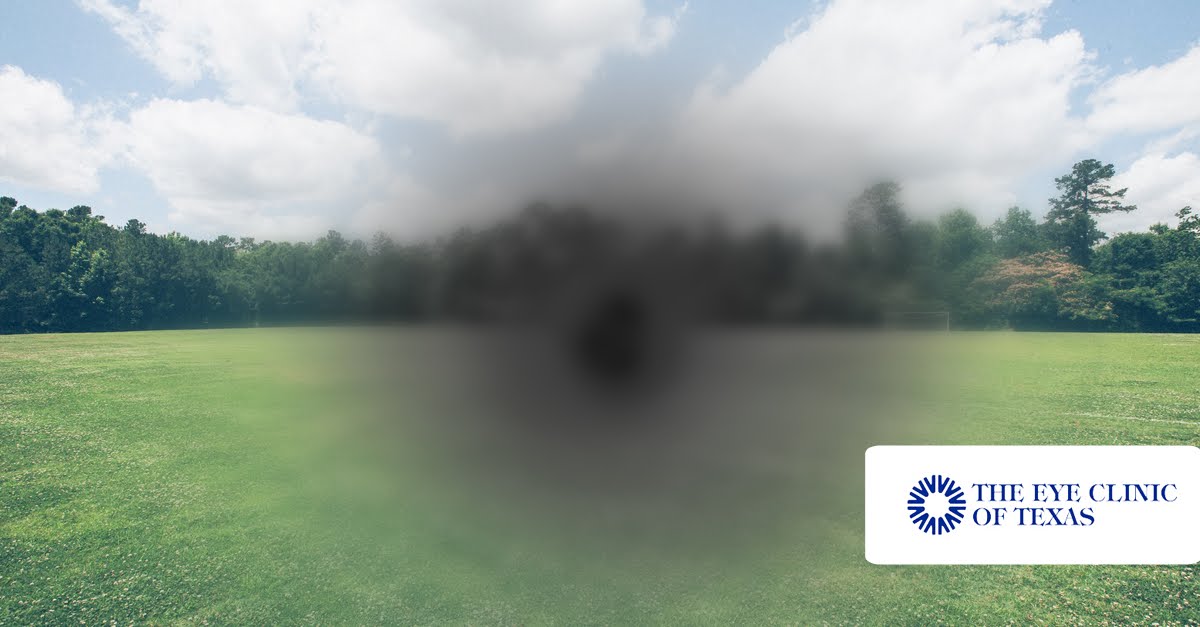
Top 5 AMD Risk Factors


Age Related Macular Degeneration (AMD) is the leading cause of severe vision loss among Americans ages 65 and over. To help reduce your chance of vision loss from AMD:
  • know the risk factors for AMD,
  • know your family eye & medical history, and
  • Schedule and keep regular eye exam appointments.
The Top 5 Risk Factors for AMD include:
  • Being over the Age of 60
  • Having a Family History of AMD
  • Cigarette Smoking
  • Obesity
  • Hypertension
People with any two of these risk factors should schedule an appointment with an ophthalmologist and,

People who are at risk should know the symptoms of Wet AMD, the form most likely to cause rapid and serious vision loss including:
  • sudden, noticeable loss of vision, or
  • sudden distortion of vision, such as seeing "wavy" lines. 
See an ophthalmologist right away if these symptoms occur. Treatments for wet AMD provide an excellent chance of stopping vision loss. They may actually restore some vision when macular degeneration develops. Earlier diagnosis of wet AMD gives a better chance of successful treatment. You can control some AMD risk factors, such as smoking and diet, to reduce the risk of vision loss.

One way to reduce AMD risk is to quit smoking or never start. You can't control all your risks, however. For example, you can't do anything about your genetics. Knowing family medical history and sharing it with your ophthalmologist is an important step to protect your vision. For patients at high risk for developing late-stage wet AMD, taking a specific, AMD dietary supplement lowers that risk by 25 percent. However, patients should check with their ophthalmologist before starting any dietary supplement!

The FDA Warns About Smoking, Eye Health & Vision Problems


We have strongly recommended that patients stop smoking and even avoid second hand smoke as we have reviewed the studies demonstrating the increased risk of Age Related Macular Degeneration (AMD), Cataracts, Diabetic Retinopathy, Dry Eye and even Optic Nerve Damage among those who smoked. This is in addition to full range of cardiovascular problems. Now the U.S. Food and Drug Administration has recently proposed new warning labels for cigarettes and cigarette advertising in which two of the FDA's 13 new proposed cigarette warning labels feature effects of smoking that are linked to eyes and vision. These two new warnings focus on the leading causes of blindness in the United States-Age Related Macular Degeneration (AMD) and Cataracts! Our message to patients remains strong-If you are a smoker-STOP! If you are not a smoker-DON’T START!
If you or someone you know has been a smoker or is around smokers it would be important to schedule an eye exam at The Eye Clinic of Texas, an affiliate of Houston Eye Associates, at 800-423-3937, visit The Eye Clinic of Texas, or facebook.com/ecot.lasik.

The Eye Clinic of Texas is an affiliate of Houston Eye Associates, the largest ophthalmology clinic in the nation. We are a leading eye care practice serving the greater Houston, Galveston, League City and Texas City with offices at 1100 Gulf Freeway, Suite 114, League City, Texas 77573, 7111 Medical Center Drive, Suite 110, Texas City, Texas 77590 and 2302 Avenue P, Galveston, Texas.

Seven Myths Regarding Children's Eyes


#1 Pink eye only happens in young children. While young kids are known for getting pink eye, due to close contact in day care centers, so can teenagers, college students, and adults-especially those who don’t clean their contacts. The best way to keep pink eye from spreading is to practice good hygiene, including washing your hands, not touching your eyes, and using clean towels and other products around the face.
#2 Antibiotics are necessary to cure your child’s pink eye. Antibiotics are rarely necessary to treat pink eye. There are three types of pink eye: Viral, Bacterial & Allergic Conjunctivitis. Most cases are caused by viral infections or allergies and do not respond to antibiotics. Antibiotics may be prescribed for bacterial conjunctivitis depending on severity. Mild cases of bacterial conjunctivitis usually resolve on their own within 7 to 14 days without treatment.
#3 Sun is bad for your eyes. While it’s true that long-term exposure to the sun without proper protection can increase the risk of eye disease, some studies suggest sun exposure is necessary for normal visual development. Children who have less sun exposure seem to be at higher risk for developing myopia or nearsightedness. Just make sure they’re protected with UV-blocking sunglasses and sunscreen.
#4 Blue light from screens is damaging children’s vision. Contrary to what you may be reading on the internet, blue light is not blinding you or your screen-obsessed kids. While it is true that nearsightedness is becoming more common, blue light isn’t the culprit. In fact, we are exposed to much more blue light naturally from the sun than we are from our screens. The important thing to remember is to take frequent breaks. Use the 20-20-20 rule: look at an object at least 20 feet away every 20 minutes for at least 20 seconds.
#5 Vision loss only happens to adults. The eyes of a child with amblyopia (lazy eye) may look normal, but this eye condition can steal sight if not treated. Amblyopia is when vision in one of the child’s eyes is reduced because the eye and brain are not working together properly. Strabismus (crossed eyes) is another eye condition that can cause vision loss in a child. Strabismus is when the eyes do not line up in the same direction when focusing on an object.
#6 All farsighted children need glasses. Most children are farsighted early in life. It’s actually normal. It doesn’t necessarily mean your child needs glasses because they use their focusing muscles to provide clear vision for both distance and near vision. Children do need glasses when their farsightedness blurs their vision or leads to strabismus. They will also need glasses if they are significantly more farsighted in one eye compared with the other, a condition that puts them at risk of developing amblyopia.
#7 There is no difference between a vision screening and a vision exam. While it’s true that your child’s eyes should be checked regularly, a less invasive vision screening by a pediatrician, family doctor, ophthalmologist, optometrist, orthoptist, or person trained in vision assessment of preschool children is adequate for most children. If the screening detects a problem, the child may need to see an ophthalmologist or other eye care professional. A comprehensive exam involves the use of eye drops to dilate the pupil, enabling a more thorough investigation of the overall health of the eye and visual system.

If you or someone you know has a child with eye health or vision problems, please be sure to schedule an eye exam at The Eye Clinic of Texas, an affiliate of Houston Eye Associates, at 800-423-3937, visit The Eye Clinic of Texas, or facebook.com/ecot.lasik.

The Eye Clinic of Texas is an affiliate of Houston Eye Associates, the largest ophthalmology clinic in the nation. We are a leading eye care practice serving the greater Houston, Galveston, League City and Texas City with offices at 1100 Gulf Freeway, Suite 114, League City, Texas 77573 and 7111 Medical Center Drive, Suite 110, Texas City, Texas 77590.

Masks: Why Are We All Wearing One?


We know that the primary way people get infected with COVID-19 is through respiratory droplets. Respiratory droplets are released into the air when you sneeze, cough AND talk! The research tells us that face masks-even common cloth masks, surgical masks and non-fit-tested respirators, can be an effective barrier to spreading respiratory droplets. So…we are…and we ask you to…wear a mask please!

We look forward to seeing you soon for your regular eye exams for eye health & vision! Should you need help for a contact lens irritation, red eye or contact lens problem, PLEASE CALL 800-423-3937 and we can provide you with either a TeleEyeHealth Virtual Visit & Consultation  or schedule an appointment for a personal visit at The Eye Clinic of Texas.

Visit us at The Eye Clinic of Texas or on Facebook.

Practical Eye Health Tips for COVID


There are some practical eye health tips and precautions that you should consider to stay safe from COVID risk. We suggest thinking about:
  • If You Wear Contact Lenses, Consider Switching to Glasses for a While. There's no evidence that wearing contact lenses increases your risk of Coronavirus infection, but if you wear contacts, you tend to touch your eyes more than average. Wearing glasses decreases the likelihood and need to touch your eyes. 
  • Wearing Glasses May Add a Layer of Protection. Eyeglasses or sunglasses can shield your eyes from infected respiratory droplets in the air, but they don’t provide 100% security. The virus can still reach your eyes from the exposed sides, tops and bottoms of your glasses. If you’re caring for a sick patient or potentially exposed person, safety goggles may offer a stronger defense. 
  • Stock Up on Eye Drops and Medicine Prescriptions If You Can. If possible try to stock up on critical medications and eye drops, so that you’ll have enough to get by if you are quarantined or if your pharmacy is unable to fill your refills. If your insurance allows you to get more than 1 month of essential eye medicine, such as glaucoma drops, you should do so. Some insurers will approve a 3-month supply of medication in times of natural disaster. Ask your pharmacist or our office for help if you have trouble getting approval from your insurance company. And as always, request a refill as soon as you’re due. Don’t wait until the last minute to contact your pharmacy. 
  • Avoid Rubbing Your Eyes. Everyone rubs their eyes! We all do it and it can be a tough to stop. But-doing so will lower your risk of infection. If you feel an urge to itch or rub your eye or even to adjust your glasses, use a tissue instead of your fingers. Dry eyes can lead to more rubbing, so consider adding moisturizing drops to your eye routine. If you must touch your eyes for any reason-even to administer eye medicine-wash your hands first with soap and water for at least 20 seconds. Then wash them again afterwards. 
We look forward to seeing you soon for your regular eye exams for eye health & vision! In the meantime if you, a friend or relative should need help for a contact lens irritation, red eye or contact lens problem, PLEASE CALL 1-800-423-3937 and we can provide you with either a TeleEyeHealth Virtual Visit & Consultation or schedule an appointment for a personal visit at The Eye Clinic of Texas. Visit us at The Eye Clinic of Texas or Facebook.com/ecot.lasik/.

Eye Drops for Droopy Eyelids

Did you know that there is a prescription eye drop to help droopy eyelids? It is estimated that 10-12% of adults have a droopy eyelid, but m...