Amblyopia or Lazy Eye is the most common cause of single eye vision poor vision in children. Amblyopia is most often caused by an eye turning problem-strabismus (crossed eyes or turned out eyes), an uncorrected refractive error such as nearsightedness, farsightedness or astigmatism in one eye more than the other or by some other type of visual deprivation such as a pediatric cataract. The standard treatment is correcting the refractive error with eyeglasses and patching of the better seeing eye. Researchers looked at a large group of children over 15 years to see how well the amblyopic children maintained their vision. Generally, this occlusion therapy is a very successful treatment. However, its success is hampered by non‐compliance. The level of non compliance was directly related to: a) a low initial visual acuity b) poor parental fluency in the national language and c) a low parental level of education. They found that with strong parental education about the children, their vision and success with patching, the compliance could be improved significantly and thus the vision as well.
If you or someone you know has a child with an eye turning problem or appears to have other eye health or vision problems, please do not wait. Schedule an eye exam at The Eye Clinic of Texas, an affiliate of Houston Eye Associates, at 800-423-3937, visit The Eye Clinic of Texas, or Facebook.
The Eye Clinic of Texas is an affiliate of Houston Eye Associates, the largest ophthalmology clinic in the nation. We are a leading eye care practice serving the greater Houston, League City area with offices at 1100 Gulf Freeway, Suite 114, League City, Texas 77573.

Information about Bladeless All Laser LASIK, Cataract Surgery & Lens Implants, Eye Exams for Diabetic Retinopathy, Macular Degeneration and Glaucoma in greater Houston & League City.
Bright Days with Cataract Surgery
“I had a great experience! I love Dr. Milstein and his staff. They always take such good care of me. My vision is so much brighter. I highly recommend Dr. Milstein to all my friends.” – Becky S.
If you or someone you know is experiencing cataract symptoms such as cloudy foggy vision, glare or difficult night driving and would like to learn more about cataract surgery & lens implants please call The Eye Clinic of Texas, an affiliate of Houston Eye Associates, at 800-423-3937, visit The Eye Clinic of Texas, or Facebook.
The Eye Clinic of Texas is an affiliate of Houston Eye Associates, the largest ophthalmology clinic in the nation. We are a leading eye care practice serving the greater Houston, League City and Texas City with offices at 1100 Gulf Freeway, Suite 114, League City, Texas 77573.
What is a Stye?
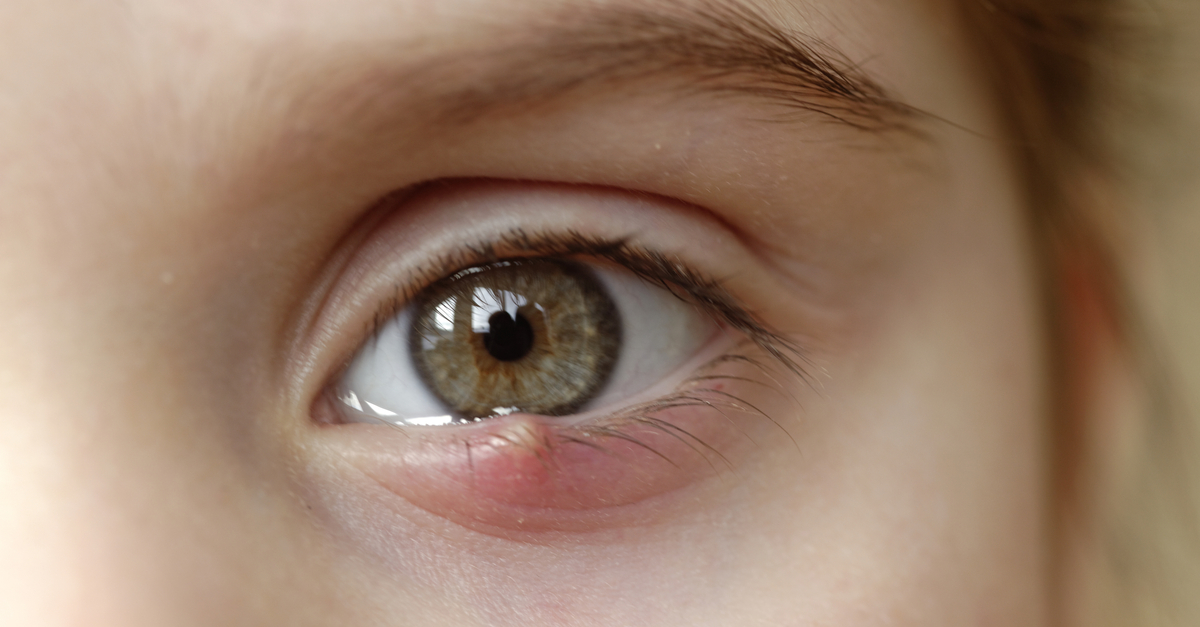
A stye-also called a Hordeolum-is a red, sore lump near the edge of the eyelid that grows from the base of your eyelash or under the eyelid. Most styes are caused by a bacterial infection. There are two kinds of styes:
·
External Hordeolum: A stye that begins at the base of your
eyelash often from an infection in the hair follicle that looks like a pimple.
·
Internal Hordeolum: A stye inside your eyelid that is caused by
an infection in an oil-producing gland in your eyelid.
There are a number of ways your doctor can treat a stye including warm compresses, antibiotics or in office surgery if the other treatments aren’t helping. Never squeeze a stye!
If you or someone you know has a stye please schedule an appointment at The Eye Clinic of Texas, an affiliate of Houston Eye Associates, at 800-423-3937, visit The Eye Clinic of Texas, or Facebook.
The Eye Clinic of Texas is an affiliate of Houston Eye Associates, the largest ophthalmology clinic in the nation. We are a leading eye care practice serving the greater Houston, League City and Texas City with offices at 1100 Gulf Freeway, Suite 114, League City, Texas 77573.
Life Changing LASIK Experience
“The LASIK procedure was simple as I had heard. My life has changed from having to look for my glasses, to just getting up and seeing perfect. Wish I would have done this procedure a long time ago. Life changing!” – Alberto D.
If you or some you know is tired of the hassle of glasses or contact lenses for seeing at distance and would like to find out if LASIK or SMILE might be a good vision correction option, please call The Eye Clinic of Texas, an affiliate of Houston Eye Associates, at 800-423-3937, visit The Eye Clinic of Texas, or Facebook.
The Eye Clinic of Texas is an affiliate of Houston Eye Associates, the largest ophthalmology clinic in the nation. We are a leading eye care practice serving the greater Houston, League City and Texas City with offices at 1100 Gulf Freeway, Suite 114, League City, Texas 77573.
Herpes Zoster Vaccine: Should You Have It?
Herpes Zoster Ophthalmicus (HZO) is a type of eye infection caused by the Herpes Zoster virus. While most people know of different types of Herpes virus, most are not familiar with the devastating consequences including vision loss of HZO. In addition, recent studies reported in Ophthalmology, showed that the incidence of HZO has increased 3.6% per year from 1994 to 2018 in the United States. Yet, the vaccination rate for Herpes Zoster remains low. The American Academy of Ophthalmology Public Health Committee suggests that greater efforts should be made to vaccinate eligible adults 50 years of age and older according to recommended schedules. If you are over 50 and have not had a Herpes Zoster vaccination ask your primary care doctor if you are eligible and whether it is important for you to consider. Call us at The Eye Clinic of Texas, an affiliate of Houston Eye Associates, at 800-423-3937, visit The Eye Clinic of Texas, or Facebook.
The Eye Clinic of Texas is an affiliate of Houston Eye Associates, the largest ophthalmology clinic in the nation. We are a leading eye care practice serving the greater Houston and League City with an office at 1100 Gulf Freeway, Suite 114, League City, Texas 77573.
The Eye Clinic of Texas is an affiliate of Houston Eye Associates, the largest ophthalmology clinic in the nation. We are a leading eye care practice serving the greater Houston and League City with an office at 1100 Gulf Freeway, Suite 114, League City, Texas 77573.
Eye Problems in Autistic Kids
Did you know that the risk and prevalence of certain eye problems is greater in kids with Autism Spectrum Disorder (ASD)? Autism Spectrum Disorder (ASD) affects an estimated 1.85% of children in the United States and is increasing in prevalence. For quite some there was the suspicion that kids with ASD might be at greater risk for certain eye disorders such as amblyopia, strabismus, optic neuropathy, nystagmus and even retinopathy of prematurity. Recently researchers reporting in the American Journal of Ophthalmology reviewed data from over 10 million children and found the prevalence in non ASD kids to be 3.5% and in ASD kids 12.5%. They concluded that ASD kids had about three times the likelihood of having these eye problems and suggested further studies to understand if the severity of the ASD might be related to the eye problems.
If you or someone you know has a child with ASD it would be important to schedule an eye exam. Please call The Eye Clinic of Texas, an affiliate of Houston Eye Associates, at 800-423-3937, visit The Eye Clinic of Texas, or Facebook.
The Eye Clinic of Texas is an affiliate of Houston Eye Associates, the largest ophthalmology clinic in the nation. We are a leading eye care practice serving the greater Houston, League City and Texas City with offices at 1100 Gulf Freeway, Suite 114, League City, Texas 77573 and 7111 Medical Center Drive, Suite 110, Texas City, Texas 77590.
Eyebrow & Eyelash Enhancement Risks

Did you know that eyebrow and eyelash enhancement treatments performed in salons can have risks you should be aware of? Having your eyebrows and eyelashes treated in a salon may seem like an easy way to enhance your look, but microblading, eyebrow lamination, eyelash lifts and tints can have risks to know about.
Types of Eyebrow & Eyelash Enhancement
Eyebrow & Eyelash Tinting: During this 15-minute procedure, semi-permanent dye is painted onto the eyebrows or eyelashes to make them appear thicker, darker and fuller. The color lasts for about three to six weeks.
Eyebrow Microblading: Microblading is also known as eyebrow tattooing, micro feathering or micro shading where a permanent pigment is tattooed into the skin using a needle mounted on a small handheld tool. The effects last for years.
Eyebrow Lamination: This is a chemical treatment, takes less than 1 hour and does not involve needles or semi-permanent dye, but rather a perming cream is brushed into the eyebrows to allow the hair to be sculpted into a more desirable shape. The procedure effects last for several weeks.
Eyelash Perm: During an eyelash perm the lashes are coated with an adhesive and curled around rollers. Chemical solutions are then applied to the lashes to create a long-lasting curl with the effects lasting one to two months.
Eyelash Lift: An eyelash lift, often combined with an eyelash tint, involves combing eyelashes to a silicone shield and holding them there with adhesive while a chemical lotion is applied to break down the protein in each eyelash and encourage it to grow upward instead of outward. The results last about six to eight weeks.
Risks of Eyebrow & Eyelash Enhancement
Eyebrow and eyelash enhancements pose eye health risks because they are so close to the eye. These treatments could cause problems with the eyes and affect vision, especially since there is a risk of sensitivity due to repeated exposure during the treatments. The Food and Drug Administration (FDA) has not approved any color additives for permanent dyeing or tinting of eyelashes and eyebrows. The agency says permanent eyelash and eyebrow tints and dyes have been known to cause serious eye injuries, including blindness. Despite issuing warnings, the FDA cannot regulate salons. That job falls to state and local governments, which can have different rules. There are no set standards for eyelash and eyebrow tinting and it can be hard to judge how safe it is. Even if the FDA were to approve dyes for tinting, it would still be possible to get infections and allergic reactions, so FDA approval alone does not automatically make the procedure guaranteed totally safe. If you have a reaction to any type of hair dye or cosmetic, you should contact your health care provider as well as schedule an appointment to see us if it involves your eyelashes, eyelids or delicate tissue around your eyes. Call The Eye Clinic of Texas, an affiliate of Houston Eye Associates, at 800-423-3937, visit The Eye Clinic of Texas, or Facebook.
The Eye Clinic of Texas is an affiliate of Houston Eye Associates, the largest ophthalmology clinic in the nation. We are a leading eye care practice serving the greater Houston, League City and Texas City with offices at 1100 Gulf Freeway, Suite 114, League City, Texas 77573 and 7111 Medical Center Drive, Suite 110, Texas City, Texas 77590.
Viagra & Vision Problems

Did you know that in high doses the erectile dysfunction medicine Viagra can cause vision problems? Recent reports in Frontiers in Neurology relayed that Sildenafil, sold under the brand name Viagra is considered safe for men with erectile dysfunction, but at high doses the drug can have lasting effects on vision. The men in this study took the drug without prescription and at the highest recommended dose: 100 milligrams. All of the men experienced vision disturbances ranging from light sensitivity and blurriness to colorblindness and blue-tinted vision. The symptoms continued long after the drug’s desired effects wore off and in some cases lasted as long as three weeks.
What We Know
Viagra boosts blood flow by turning off an enzyme called phosphodiesterase 5. But in the process, the drug also meddles with a related enzyme in retinal cells. At high doses, experts say, this could permanently damage the retina. Side effects most often emerge in men with other underlying health conditions such as high blood pressure or heart conditions. Erectile dysfunction drugs are tied to ischemic optic neuropathy, a sudden and permanent vision loss caused by interrupted blood flow to the optic nerve. This in fact is most common in men with high blood pressure or heart conditions.
While the report raises concerns, experts do not recommend discarding the drug. One key takeaway: Only use ED medicine under medical supervision, and at a prescribed dose!. Also, purchase the drug from a trusted source. Counterfeit drugs, often sold online, are not regulated by the FDA and may not meet quality and safety standards. Call The Eye Clinic of Texas, an affiliate of Houston Eye Associates, at 800-423-3937, visit The Eye Clinic of Texas, or Facebook.
The Eye Clinic of Texas is an affiliate of Houston Eye Associates, the largest ophthalmology clinic in the nation. We are a leading eye care practice serving the greater Houston, League City and Texas City with offices at 1100 Gulf Freeway, Suite 114, League City, Texas 77573 and 7111 Medical Center Drive, Suite 110, Texas City, Texas 77590.
Eye Drops for Droopy Eyelids
Did you know that there is a prescription eye drop to help droopy eyelids? It is estimated that 10-12% of adults have a droopy eyelid, but many don’t know it’s considered a disorder, or that it can be treated. Droopy eyelid occurs when muscles that keep the eye open lose function with age. It can affect one or both eyes. As the eyelid droops, the opening of the eye constricts and vision can become impaired. Until now, the only way to treat ptosis was to have eyelid surgery. Ptosis eyelid surgery is usually only performed in severe cases of droopy eyelids. Recently a once a day prescription eye drop, called Upneeq, became available to help with droopy eyelids. The prescription eye drop provides an alternative to surgery and off-label drugs, the only options for fixing droopy eyelid until now. Upneeq works on a muscle that elevates the eyelid. It causes that muscle to contract, allowing the eyelid to open 1-2 millimeters wider than before treatment. Upneeq doesn’t work for people who have droopy eyelid due to excess skin, saggy eyebrows, or underlying eye injury or nerve problems. The drug is not a treatment for congenital ptosis and has not been studied or approved for children born with droopy eyelids.
If you or someone you know suffers from droopy eyelid please schedule an appointment so we can evaluate your individual case and help determine if Upneeq or another treatment option might be right for you. Call The Eye Clinic of Texas, an affiliate of Houston Eye Associates, at 800-423-3937, visit The Eye Clinic of Texas, or Facebook.
The Eye Clinic of Texas is an affiliate of Houston Eye Associates, the largest ophthalmology clinic in the nation. We are a leading eye care practice serving the greater Houston, League City and Texas City with offices at 1100 Gulf Freeway, Suite 114, League City, Texas 77573 and 7111 Medical Center Drive, Suite 110, Texas City, Texas 77590.
If you or someone you know suffers from droopy eyelid please schedule an appointment so we can evaluate your individual case and help determine if Upneeq or another treatment option might be right for you. Call The Eye Clinic of Texas, an affiliate of Houston Eye Associates, at 800-423-3937, visit The Eye Clinic of Texas, or Facebook.
The Eye Clinic of Texas is an affiliate of Houston Eye Associates, the largest ophthalmology clinic in the nation. We are a leading eye care practice serving the greater Houston, League City and Texas City with offices at 1100 Gulf Freeway, Suite 114, League City, Texas 77573 and 7111 Medical Center Drive, Suite 110, Texas City, Texas 77590.
Sunglasses Are A Must!

The Eye Clinic of Texas is an affiliate of Houston Eye Associates, the largest ophthalmology clinic in the nation. We are a leading eye care practice serving the greater Houston, League City and Texas City with offices at 1100 Gulf Freeway, Suite 114, League City, Texas 77573 and 7111 Medical Center Drive, Suite 110, Texas City, Texas 77590.
What Is a Detached Retina?

A detached retina is when the retina lifts away from the back of the eye. The
retina does not work when it is detached, making vision blurry. As we get
older, the
vitreous gel in our eyes starts to shrink
and get thinner. As the eye moves, the vitreous moves around on the retina
without causing problems. But sometimes the vitreous may stick to the retina
and pull hard enough to tear it. When that happens, fluid can pass through the
tear and lift or detach the retina.
Who is at Risk of a Detached Retina?
Patients who are at greater risk for detached
retina are those who:
>Are nearsighted and need glasses to see
far away
>Have had eye surgery such as cataract surgery
>Have had a serious eye injury
>Have had a retinal tear or detachment in the other eye
>Have family members who had retinal detachment
>Have weakened areas in their retina from thinning or
degeneration
What are Symptoms or Warning Signs of a Detached Retina?
>Sudden Flashes of
Light. Some people say this is
like seeing stars after being hit in the eye.
>New Floaters. These can look like specks, lines or cobwebs in
your field of vision.
>A Shadow
in Your Side Vision.
>A Gray
Curtain covering part of your field of vision.
A detached retina is a serious problem. If you experience any warning signs of a detached retina you need to have it examined immediately or you risk losing vision please call The Eye Clinic of Texas, an affiliate of Houston Eye Associates, at 800-423-3937, visit The Eye Clinic of Texas, or Facebook.
The Eye Clinic of Texas is an affiliate of Houston Eye Associates, the largest ophthalmology clinic in the nation. We are a leading eye care practice serving the greater Houston, League City and Texas City with offices at 1100 Gulf Freeway, Suite 114, League City, Texas 77573 and 7111 Medical Center Drive, Suite 110, Texas City, Texas 77590.
Subscribe to:
Posts (Atom)
Eye Drops for Droopy Eyelids
Did you know that there is a prescription eye drop to help droopy eyelids? It is estimated that 10-12% of adults have a droopy eyelid, but m...

-
Diabetic retinopathy (DR) is one of the leading causes of preventable blindness globally. Yet, many diabetic patients still do not schedul...
-
What do droopy, saggy eyelids and eyelid surgery have to do with headaches? While you might think that eyelid surgery or blepharoplasty is...
-
Is Your Doctor Prescribing the Wrong Treatment for Pink Eye? Based on our own experiences as well as recommendations of the American Aca...
-
 Did you know that there is a prescription eye drop to help droopy eyelids? It is estimated that 10-12% of adults have a droopy eyelid, but m...
 -
“Getting LASIK done by Dr. Milstein was one of the best decisions I have made. I have not had to wear glasses or contacts in 27 years. Also,...
-
“I was referred by two co-workers/friends that had LASIK done here and boy was I glad I took them up on the referral. I scheduled my consu...
-
We perform cataract surgery and lens implantation for more and more patients each year as cataracts continue to be a leading cause of decr...
-
“Dr. Van is an absolute miracle worker! I could not fathom that because my vision was so terrible and had always been that way that havi...
-
Mary B tells us about her cataract surgery. “I was having trouble driving because I had developed cataracts. It had reached the poi...
-
Retinal Artery Blockage May Warn of Impending Stroke A certain retinal vessel disease may be a warning of an impending stroke! When an a...